
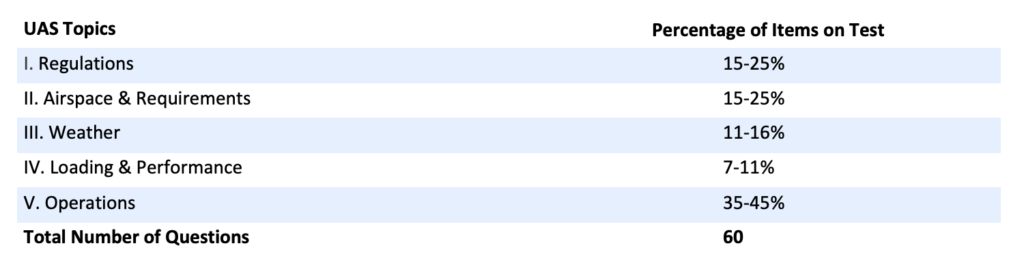
What subjects are on the Part 107 test? The FAA’s official topic list is broader than most people expect. You are not just memorizing drone rules. You are being tested on regulations, airspace, weather, loading and performance, emergency procedures, airport operations, decision-making, maintenance, and a few aviation concepts that feel unfamiliar at first.
If you want to practice these categories instead of just reading about them, the Part 107 Test Prep app is a fast way to drill them by topic. You can also scan the QR code below and jump straight in.

If you want the official source, the FAA publishes the Part 107 knowledge areas on its Become a Certificated Remote Pilot page, along with the Remote Pilot – Small Unmanned Aircraft Systems Airman Certification Standards. You can review them here: FAA Remote Pilot page and FAA Airman Certification Standards (PDF)
The good news is that not every category matters equally in practice. Some areas are table stakes. Some are classic gotchas. Here is where the test tends to make people work.
1. Regulations and operating rules
This is the backbone of the exam. You need to know the practical Part 107 rules: altitude limits, visual line of sight, right of way, night operations, flying over people, remote ID awareness, preflight responsibilities, and what the remote pilot in command is responsible for.
What the test likes to ask: what is allowed, what is prohibited, and who is responsible.
Gotcha areas: night rules, anti-collision lighting, flying from a moving vehicle, careless or reckless operation, and when you can deviate in an emergency.
2. Airspace and chart reading
This is usually one of the biggest pain points. You need to read sectional charts, identify controlled vs uncontrolled airspace, understand airport symbols, and know when authorization is required.
What the test likes to ask: what airspace you are in, whether you can fly there, and what a chart symbol means.
Gotcha areas: Class B, C, D, and E confusion; understanding the surface area of Class E; reading latitude and longitude; and interpreting airport traffic patterns and special use airspace.
3. Weather
Weather is a big deal, even when the questions look simple. At minimum, you should know METARs, TAFs, visibility, cloud clearance, basic weather sources, and how weather affects drone performance.
Table stakes: reading METARs, understanding ceiling and visibility, and knowing how wind affects operations.
Gotcha areas: stable vs unstable air, fog formation, temperature-dew point spread, and reading coded weather reports without overthinking them.
4. Loading and performance
This area is less flashy, but it matters. The FAA wants you to understand how weight, balance, density altitude, battery performance, and environmental conditions affect your aircraft.
What the test likes to ask: what makes performance worse and what conditions reduce safety margin.
Gotcha areas: high density altitude, hot weather, reduced battery efficiency, and assuming a drone will perform the same way in all conditions.
5. Airport operations
You do not need to train like a manned pilot, but you do need to understand how airports work well enough to stay out of trouble. That includes traffic patterns, runway orientation, radio awareness, and how crewed aircraft operate near an airport.
What the test likes to ask: how to interpret airport activity and how to avoid creating a conflict.
Gotcha areas: left traffic patterns, runway numbering, and recognizing that crewed aircraft always deserve your full attention.
6. Aeronautical decision-making and judgment
This category is really about common sense under pressure. The FAA wants to know whether you can make conservative choices, recognize risk, and avoid pushing a flight when conditions are questionable.
What the test likes to ask: what the safest or most responsible action is.
Gotcha areas: rushing a mission, ignoring changing weather, skipping preflight checks, or continuing a flight when you already know something is off.
7. Emergency procedures
You should know how to think through lost link, low battery, flyaway risk, and general abnormal situations. This category overlaps with judgment more than pure memorization.
What the test likes to ask: what action reduces risk fastest and safest.
Gotcha areas: confusing emergency authority with normal operations, and not recognizing when the safest answer is to stop the operation.
8. Crew resource management
This sounds more complicated than it is. For Part 107, it mostly means communication, coordination, and using your crew well if you have a visual observer or other support.
What the test likes to ask: who should communicate what, and how a team supports safe flight.
Gotcha areas: assuming a visual observer replaces pilot responsibility. They do not.
9. Maintenance and preflight inspection
This is straightforward but easy to underestimate. You need to know that the remote pilot is responsible for making sure the aircraft is in a condition for safe operation before flight.
What the test likes to ask: what should be checked before launch and what makes an aircraft unsafe to fly.
Gotcha areas: damaged propellers, battery condition, firmware assumptions, and skipping inspection because the flight is “quick.”
10. Radio procedures and aviation language
This is not usually the largest part of the test, but it can show up. You should recognize common airport and aviation terminology well enough not to freeze when the wording sounds pilot-ish.
Gotcha areas: overcomplicating radio questions. Usually the point is awareness, not deep radio expertise.
What you really must know
If you are prioritizing your study, focus hardest on:
- Part 107 operating rules
- airspace and sectional charts
- weather, especially METARs and visibility/cloud questions
- airport operations
- decision-making and safe-operation scenarios
Those categories give you the biggest return. Then tighten up loading/performance, maintenance, emergency procedures, and crew coordination.
The simplest study strategy
Do not study the test like it is one giant subject. Study it as a set of categories. Learn what each category is really testing, then practice enough questions that the patterns become obvious.
If you want the fastest way to do that, practice the categories in the app. That is usually more useful than rereading the same notes and hoping it sticks.